
Evidence-Based Healthy Living & Longevity
Everyday health choices directly modify gene expression, immune defense, and cardiovascular longevity. Explore evidence-informed guides on physical training, nutrition, restorative sleep, and age-related vitality.
Explore Lifestyle & Health Centers
Clinically reviewed protocols designed to prevent chronic disease and optimize physical performance.
Fitness & Physical Activity
Cardiorespiratory conditioning, resistance loading, spinal ergonomics, and functional joint mobility.
Clinical Nutrition & Dietetics
Cardiometabolic diets, gut microbiome nutrition, dietary fiber protocols, and therapeutic food guides.
Mental Health & Resilience
Evidence-based cognitive health, anxiety management, mood regulation, and neurobiological stress relief.
Restorative Sleep & Circadian Health
Melatonin regulation, circadian biology, cellular autophagy, and sleep hygiene architecture.
Healthy Aging & Longevity
Neurovascular health, osteoporosis prevention, senior mobility, and cellular longevity biomarkers.
Men’s & Women’s Health Hubs
Gender-specific screenings, endocrine balance, reproductive wellness, and preventative lifecycle care.
Pregnancy & Maternal-Fetal Wellness
Trimester clinical tracking, pre-eclampsia & hypertensive screening, Rh isoimmunization, and prenatal care protocols.
Smoking Cessation & Tobacco Recovery
Evidence-based nicotine tapering protocols, physiological withdrawal timelines, cravings management, and pulmonary recovery.
Sexual Health, Human Intimacy & HIV Prevention
Neurochemical cascades, cardiovascular conditioning, pelvic floor tone, viral suppression, PrEP/PEP, and U=U clinical science.
Pregnancy Clinical Spotlight: Normal Gestation vs. Critical Pre-eclampsia
Visual clinical comparison of normal physiological pregnancy versus critical multi-organ hypertensive disease, acute seizure emergencies, and evidence-based pharmacologic prevention.
Healthy spiral artery remodeling • Low-resistance placental perfusion • Thriving fetus
Normal, Low-Risk Pregnancy Features
- Blood Pressure: Normotensive (<120/80 mmHg; physiological mid-pregnancy reduction due to systemic vasodilation).
- Placental Perfusion: Complete trophoblastic invasion transforming maternal spiral arteries into low-resistance, high-capacitance conduits.
- Kidney & Liver Function: Negative to trace urine protein (<150 mg/24h), normal GFR, intact hepatic transaminases.
- Fetal Growth & Well-Being: Symmetric biometric velocity, normal amniotic fluid index (AFI), and reassuring reactive cardiotocography.
Severe hypertension ≥160/110 • Multi-organ endothelial failure • Seizure emergency
Critical Multi-Organ & Eclamptic Complications
- Severe Hypertension: BP ≥140/90 mmHg or severe range ≥160/110 mmHg with acute cerebrovascular stroke and encephalopathy risk.
- Cerebral & Visual Damage: Severe persistent headache, blurred vision, scotomata, vasogenic edema, and generalized tonic-clonic eclamptic seizures.
- Renal & Hepatic Breakdown: Massive proteinuria (≥300 mg/24h or UPCR ≥0.3), oliguria, elevated creatinine, RUQ epigastric pain, and HELLP syndrome.
- Fetal Emergency: Placental hypoperfusion, severe fetal growth restriction (IUGR), acute abruption, and emergency delivery indication.
“Low-dose aspirin (Ecosprin) is used for prevention of pre-eclampsia in selected high-risk pregnancies. It is not a treatment for eclampsia or an acute eclamptic seizure.”
Low-dose aspirin (75–150 mg daily, such as Ecosprin 75 or Ecosprin 150) may be prescribed to pregnant women at sufficiently high risk of pre-eclampsia. WHO recommends low-dose aspirin for prevention in high-risk women, generally started early in pregnancy (between 12 and 16 weeks of gestation).
Aspirin selectively inhibits platelet aggregation and rebalances the thromboxane/prostacyclin ratio. This reduces microvascular thrombosis, improves uteroplacental vascular blood flow, and significantly decreases the risk of developing pre-eclampsia.
Ecosprin does not stop an eclamptic seizure and is not the emergency treatment. Management focuses on stabilizing the mother, controlling severe hypertension, preventing/treating seizures with Magnesium Sulfate, and determining appropriate timing of delivery.
Human Sexuality, Reproductive Health & HIV Prevention
Explore peer-reviewed physiological benefits of human intimacy, molecular retrovirology, high-efficacy PrEP/PEP prophylaxis, and the landmark U=U consensus.
Physiological & Neurobiological Benefits of Sexual Intimacy
Consensual sexual activity and physical touch trigger an intricate systemic cascade benefiting cardiovascular endurance, endocrine balance, mucosal immunity, and psychological resilience.
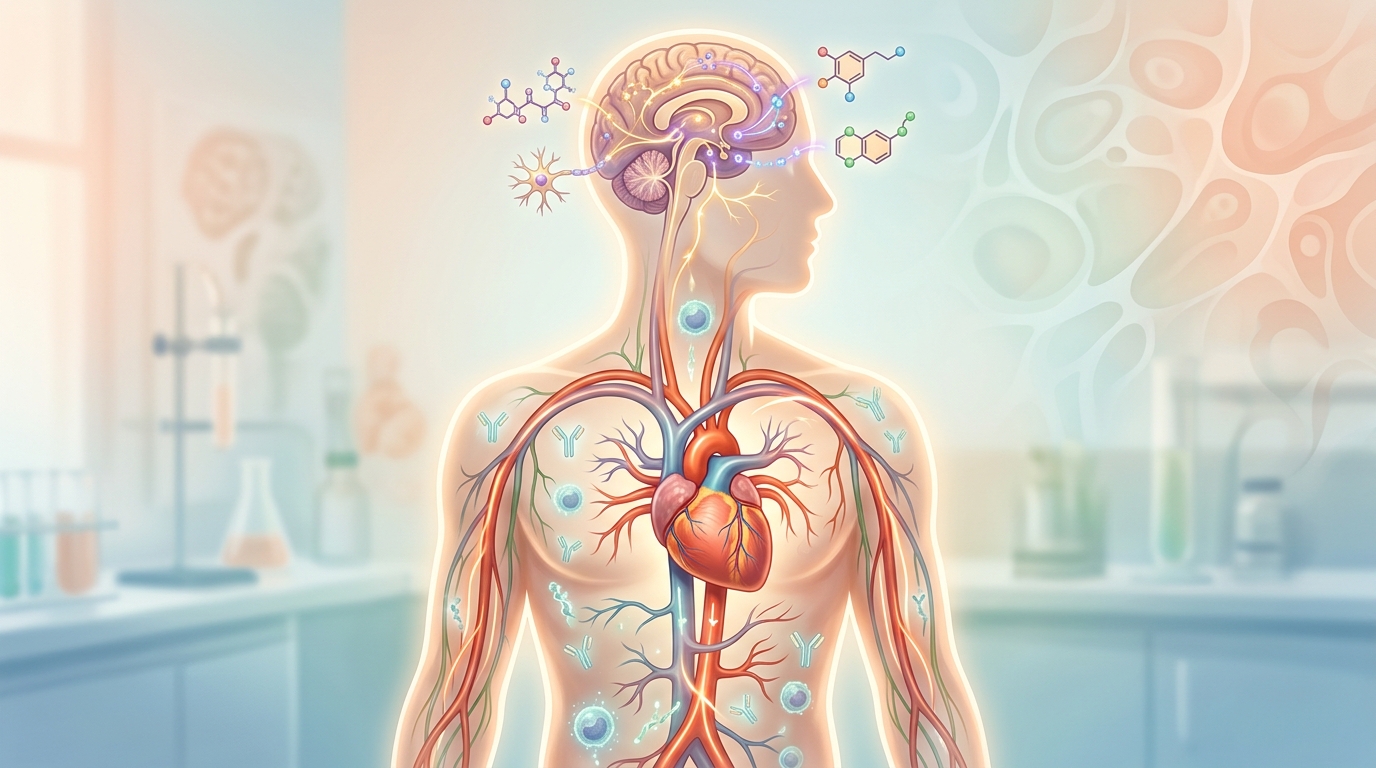
Documented in individuals sexually active 1–2x/week (Wilkes Univ)
Endogenous beta-endorphins act on spinal mu-opioid pain gates
Moderate aerobic activity equivalent to brisk walking or cycling
Harvard cohort study: 21+ monthly ejaculations vs lower frequency
Key Clinical Mechanisms & Findings
Oxytocin & Cortisol Regulation
Climax triggers synchronous oxytocin release that downregulates the amygdala and blunts sympathetic adrenal cortisol spikes, attenuating chronic systemic inflammation.
Immunoglobulin A (IgA) Fortification
Regular consensual intimacy stimulates mucosal immune pathways, raising salivary IgA antibodies that serve as the body's first defense against airborne pathogens.
Endothelial & Pelvic Conditioning
Promotes vascular nitric oxide production while rhythmic pelvic muscle contractions strengthen the pubococcygeus and levator ani muscles, preserving bladder and pelvic support.
Restorative Sleep Architecture
Post-orgasmic prolactin surge combined with dopamine downregulation expedites deep slow-wave REM sleep cycles necessary for cellular autophagy and neural repair.
Clinical studies in psychosomatic medicine indicate that healthy physical intimacy buffers against cardiovascular mortality, enhances vascular elasticity, and provides profound neuroprotective benefits against depressive mood episodes.
The 6 Pillars of Evidence-Based Health
Standardized lifestyle interventions supported by clinical epidemiology (World Health Organization & American College of Lifestyle Medicine).
1. Cardiovascular Aerobics
Improves endothelial nitric oxide production, insulin sensitivity, and lowers all-cause mortality by 20–30%.
2. Nutrient-Dense Whole Foods
Rich in monounsaturated lipids, dietary fiber (30g+ daily), and micronutrients that support the gut microbiome.
3. Circadian Architecture & Sleep
Facilitates glymphatic brain clearance of amyloid metabolites and optimizes hormonal growth & repair cascades.
4. Progressive Resistance Loading
Stimulates osteoblast bone mineralization, preserves sarcopenic lean muscle mass, and optimizes basal metabolic rate.
5. Proactive Preventative Screening
Identifies asymptomatic cardiometabolic and oncology risk factors years before clinical symptoms manifest.
6. Emotional Equilibrium & Social Connection
Buffers sympathetic adrenal drive, mitigates chronic IL-6 inflammation, and protects telomere integrity.
Interactive Healthy Living Tools
Quantify your baseline biomarkers, energy balance, and body composition.
BMI & Body Composition
Evaluate adult Body Mass Index with WHO & Asian-Pacific classification standards.
Daily Calorie Expenditure
Calculate Basal Metabolic Rate (BMR) and Total Daily Energy Expenditure (TDEE).
Ideal Body Weight Target
Compute clinical target weight ranges based on Devine and Robinson formulas.
Child Vaccination Schedule
National Immunization Schedule (NIS) tracking from birth through adolescence.
Pregnancy Due Date Calculator
Estimate gestational age and delivery date based on LMP, conception, or ultrasound.
Smoking Savings & Longevity
Calculate financial wealth preserved, cigarettes avoided, and biological life regained.
The information provided on this website is for educational purposes only and is not intended as a substitute for professional medical advice, diagnosis, or treatment. Always seek the advice of a qualified healthcare provider with any questions you may have regarding a medical condition.