
Ectopic Pregnancy
Ectopic pregnancy is a pregnancy in which a fertilized egg implants and begins to develop outside the normal cavity of the uterus (womb). In most cases, the pregnancy develops within a fallopian tube, although ectopic implantation can occur in other locations, including the cervix, ovary, or abdominal cavity.
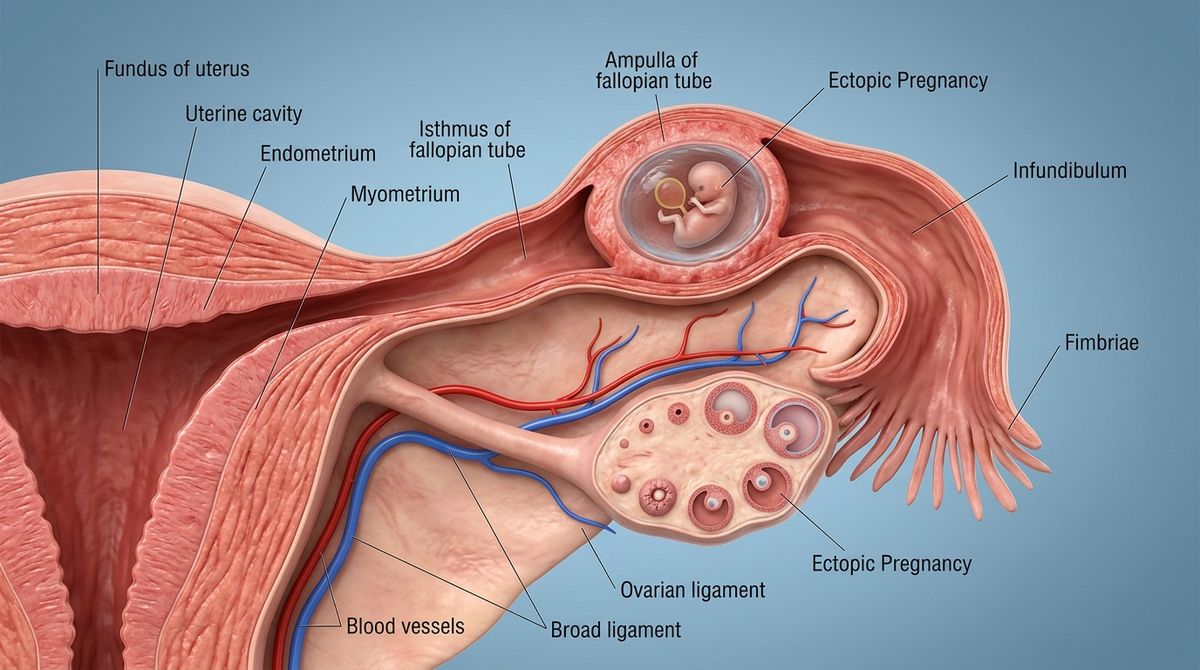
Child Developing in Fallopian Tube
Child Developing in Fallopian Tube
In a tubal ectopic pregnancy, the fertilized embryo implants inside the narrow lumen of the fallopian tube (ampulla) rather than within the protective uterine cavity.

Patient Under Critical Care in ICU / OT
Patient in Critical Care (ICU / OT)
Ruptured ectopic pregnancy triggers severe hemorrhagic shock, necessitating emergent ICU resuscitation, arterial monitoring, and immediate exploratory surgery in the Operating Theatre.
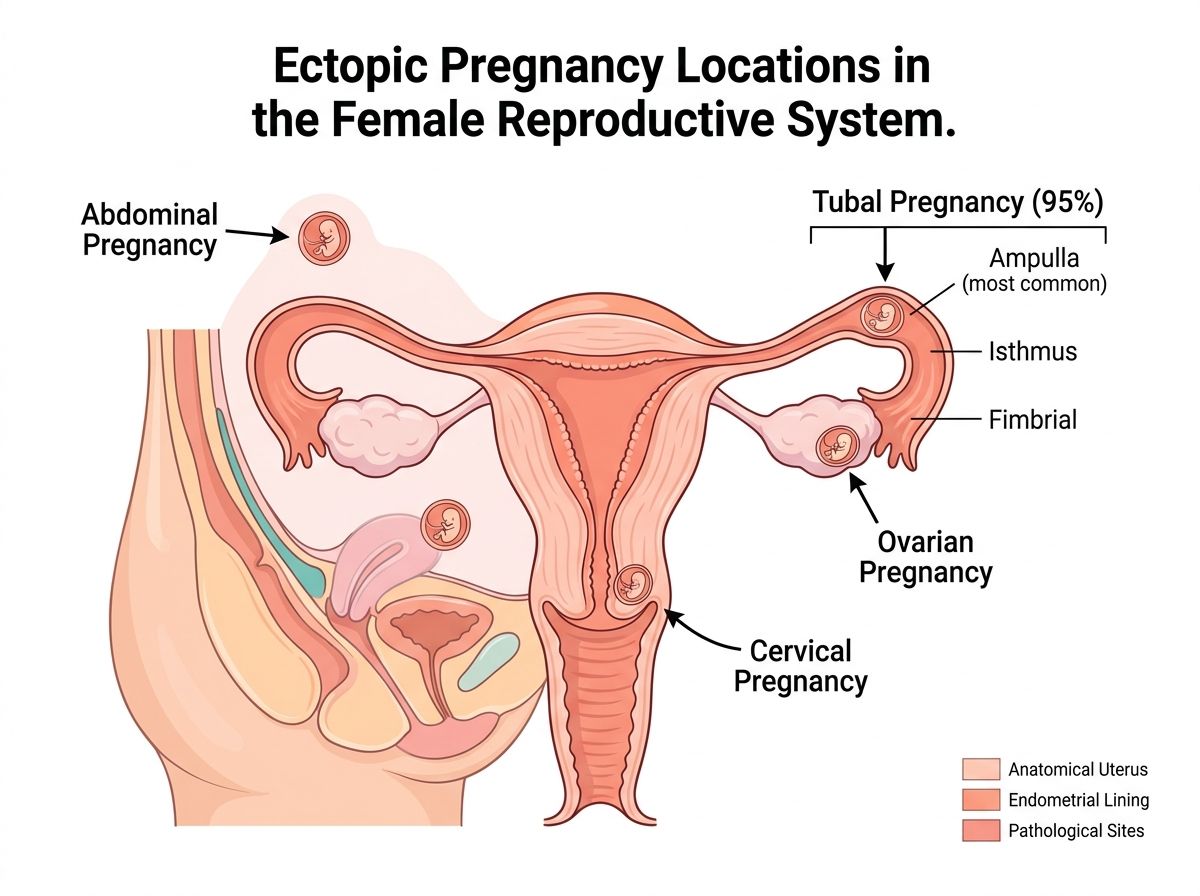
Ampulla · Isthmus · Fimbrial · Interstitial
Where Implantation Occurs
95% implant in the fallopian tube (ampulla 70%, isthmus 12%, fimbrial 11%). The remaining 5% occur in the ovary (3%), cervix (1%), or abdominal cavity (1%).
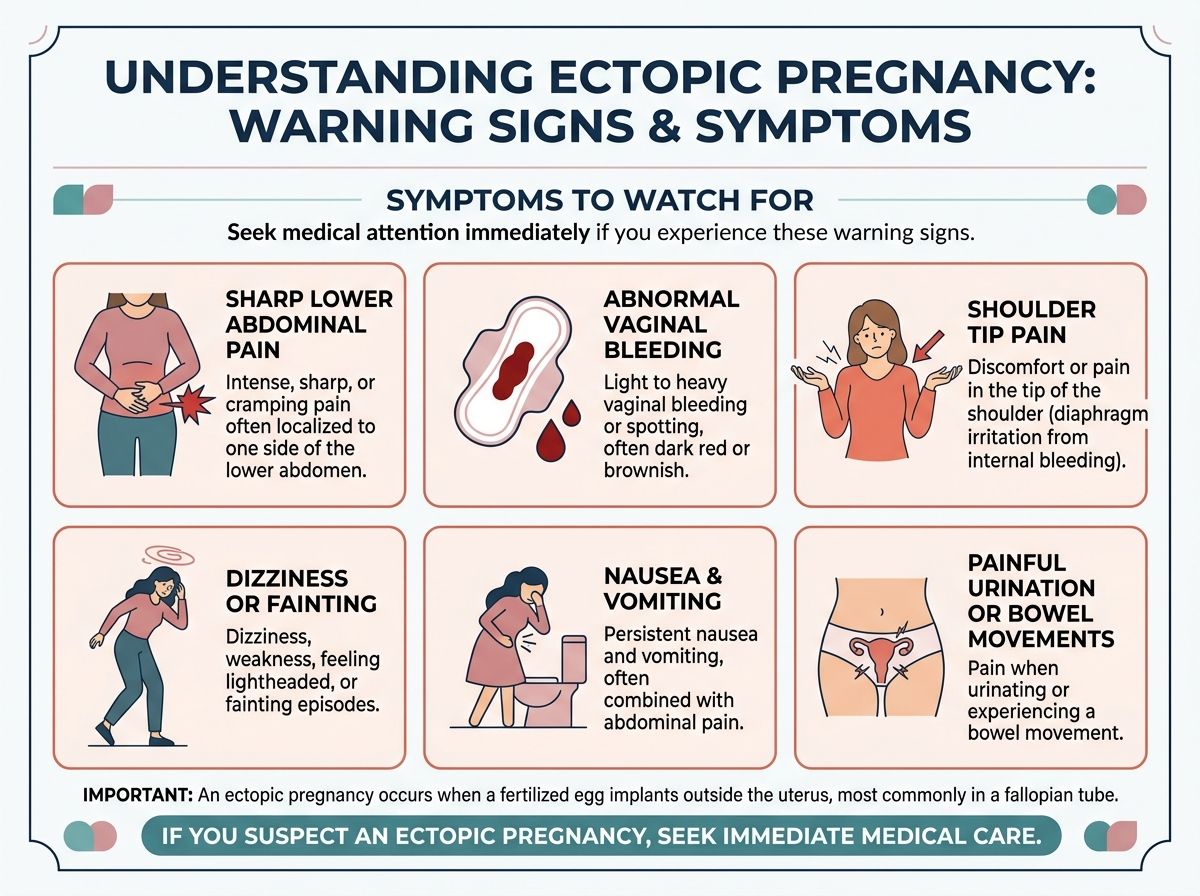
Abdominal Pain · Spotting · Shoulder Tip
Critical Warning Signs
Sharp unilateral lower abdominal pain, abnormal vaginal spotting, shoulder tip pain from diaphragmatic irritation, and weakness or dizziness from internal bleeding.
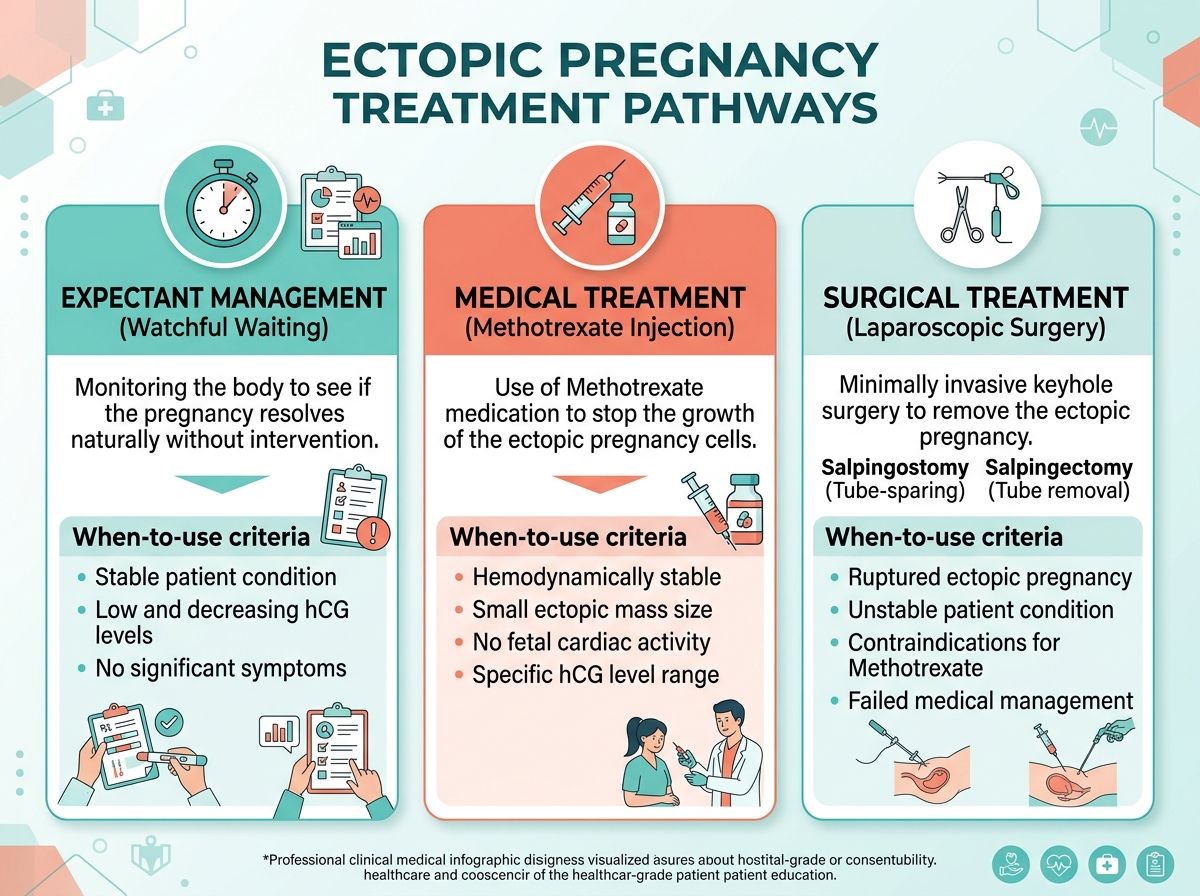
Watchful Waiting · Medical · Laparoscopy
Treatment Pathways
Treatment depends on hemodynamic stability, β-hCG levels, and mass size. Expectant management, Methotrexate (88–96%), or emergency laparoscopy (salpingostomy/salpingectomy).
Essential Clinical Guide to Ectopic Pregnancy
Clear, evidence-based medical information explaining causes, early warning signs, diagnostic standards, treatment modalities, and emergency triage.
Causes and Risk Factors
An ectopic pregnancy may occur when the normal movement of a fertilized egg through the fallopian tube is disrupted. Factors associated with an increased risk include:
- Previous ectopic pregnancy
- Damage or abnormalities of the fallopian tubes
- Previous pelvic or fallopian-tube surgery
- Pelvic inflammatory disease or certain sexually transmitted infections
- Pregnancy occurring while using certain forms of contraception, although pregnancy itself is uncommon with these methods
- Fertility treatments, including assisted reproductive techniques
- Smoking
Symptoms
Symptoms commonly develop during the early stages of pregnancy and may include:
- Lower abdominal or pelvic pain, sometimes more pronounced on one side
- Vaginal bleeding or spotting
- A missed menstrual period or other symptoms of early pregnancy
- Shoulder-tip pain in some cases
- Dizziness, weakness, or fainting, particularly if internal bleeding occurs
Diagnosis
Diagnosis generally involves a combination of:
- Pregnancy testing, including measurement of the hormone β-hCG
- Transvaginal ultrasound, to determine the precise anatomical location of the pregnancy
- Repeat β-hCG measurements, when necessary to evaluate rate of rise or decline
- Clinical examination, and ongoing assessment of symptoms, pelvic tenderness, and vital signs
Treatment
An ectopic pregnancy cannot develop normally outside the uterus and cannot safely be relocated to the uterus. Treatment depends on factors such as the pregnancy's location and size, β-hCG levels, symptoms, and the individual's overall condition.
Treatment may include:
When Emergency Care Is Needed
A ruptured ectopic pregnancy triggers rapid, life-threatening internal arterial bleeding (hemoperitoneum). Sudden sharp unilateral pelvic pain, fainting, marked dizziness, or shoulder-tip pain in someone who may be pregnant is a STAT medical emergency.
Immediate hospitalization in the ICU or Operating Theatre (OT) is essential to halt internal hemorrhage and safeguard maternal survival.
Why Extrauterine Sites Cannot Sustain Pregnancy
Under normal physiology, fertilization occurs in the ampulla of the fallopian tube. The developing blastocyst is propelled over 3 to 4 days toward the uterus by coordinated ciliary beating and smooth muscle peristalsis, implanting into the hormone-primed endometrium. In an ectopic pregnancy, this transport is arrested, and the blastocyst implants into tissues incapable of supporting placental invasion.
Tubal Damage & Obstruction
Prior PID, surgery, or endometriosis creates intraluminal adhesions, ciliary destruction, or structural kinking that physically traps the fertilized egg before it reaches the uterus.
Impaired Tubal Transport
Hormonal imbalances (progesterone/estrogen), smoking-induced ciliary paralysis, or tubal muscular dysfunction slow the egg's 3–4 day journey through the fallopian tube.
Ectopic Implantation & Growth
The blastocyst implants into the thin tubal wall, eroding into blood vessels. As trophoblast cells proliferate (doubling every 48 hrs), the inelastic tube distends and eventually ruptures.
Frequently Asked Clinical Questions
Clinical Guidelines & Hospital Triage Recommendations
What is the discriminatory β-hCG zone for transvaginal ultrasound?
According to the American College of Obstetricians and Gynecologists (ACOG Practice Bulletin No. 193), the discriminatory β-hCG level is typically defined as 1,500 to 2,000 mIU/mL when using high-resolution transvaginal sonography (TVUS). At or above this threshold, a normal intrauterine gestational sac must reliably be visualized within the endometrial cavity. If serum β-hCG exceeds 2,000 mIU/mL and the uterine cavity is definitively empty on expert TVUS, an ectopic pregnancy or complete miscarriage must be assumed until proven otherwise.
Why is Methotrexate preferred over surgery in select early cases?
When diagnosed early before tubal distension exceeds 3.5 cm and while the patient remains hemodynamically stable, medical management with intramuscular Methotrexate achieves an 88–96% resolution rate without the anesthetic risks, pelvic adhesion risks, or permanent structural changes associated with surgery. Subsequent intrauterine pregnancy rates (~65%) and recurrent ectopic rates (~10%) are statistically comparable between methotrexate and laparoscopic salpingostomy, making medical therapy an excellent fertility-sparing option.
What is a heterotopic pregnancy and who is most at risk?
A heterotopic pregnancy is the rare simultaneous coexistence of an intrauterine pregnancy (inside the uterus) and an ectopic pregnancy (outside the uterus). In natural spontaneous conceptions, the incidence is extremely rare (approximately 1 in 30,000 pregnancies). However, in pregnancies conceived via in-vitro fertilization (IVF) and assisted reproductive technologies (ART), the risk escalates dramatically to approximately 1 in 100 to 1 in 500 pregnancies. Clinicians must always perform a complete bilateral adnexal evaluation during early pregnancy scans even after confirming an intrauterine gestational sac.
If a fallopian tube ruptures in an ectopic pregnancy, what should be done?
A ruptured fallopian tube is a life-threatening surgical emergency causing severe intra-abdominal hemorrhage. Immediate four-step protocol must be executed:
- Immediate 911 / EMS Dispatch: Call emergency services immediately — do not drive. Keep patient lying flat with legs elevated (Trendelenburg position) to support blood pressure. Strict NPO (no food or water) for anesthesia.
- Emergency Hospital Resuscitation: Two large-bore IV lines (14G–16G), rapid crystalloid fluid infusion, STAT Type & Crossmatch for 4–6 units of packed red blood cells (PRBCs), and activation of massive transfusion protocol.
- Immediate Surgery (Salpingectomy): Emergency surgical removal of the ruptured fallopian tube (salpingectomy) to clamp the bleeding tubal artery and achieve definitive hemostasis. Performed via laparotomy if unstable or laparoscopy if stable.
- Peritoneal Evacuation & RhoGAM: Suction of hemoperitoneum, and administration of Anti-D Immunoglobulin (RhoGAM) within 72 hours if the mother is Rh-negative.
Clinical Practice Citations & Medical Review
- American College of Obstetricians and Gynecologists (ACOG): Practice Bulletin No. 193: Tubal Ectopic Pregnancy. Obstetrics & Gynecology, 2018 (Reaffirmed 2023).
- Royal College of Obstetricians and Gynaecologists (RCOG): Green-top Guideline No. 21: Diagnosis and Management of Ectopic Pregnancy, 2016.
- National Institute for Health and Care Excellence (NICE): Clinical Guideline NG126: Ectopic pregnancy and miscarriage: diagnosis and initial management, updated 2023.
- World Health Organization (WHO): Managing Complications in Pregnancy and Childbirth: A guide for midwives and doctors, 2023.