
For general information only. Not a substitute for professional medical advice.
Medi Info Hub Logo

Purpura & Vascular Bleeding Disorders
Educational content • Medi Info HubUpdated: 10/19/2026
Purpura & Vascular Bleeding Disorders clinical reference photography
Clinical Photographic Reference
Medical Visual GuideHematology & Rheumatology

Purpura & Vascular Bleeding Disorders

Educational photographic and clinical reference illustrating presentation, affected anatomy, or clinical evaluation of Purpura & Vascular Bleeding Disorders.

Topic-Accurate VisualClinical Reference

Overview

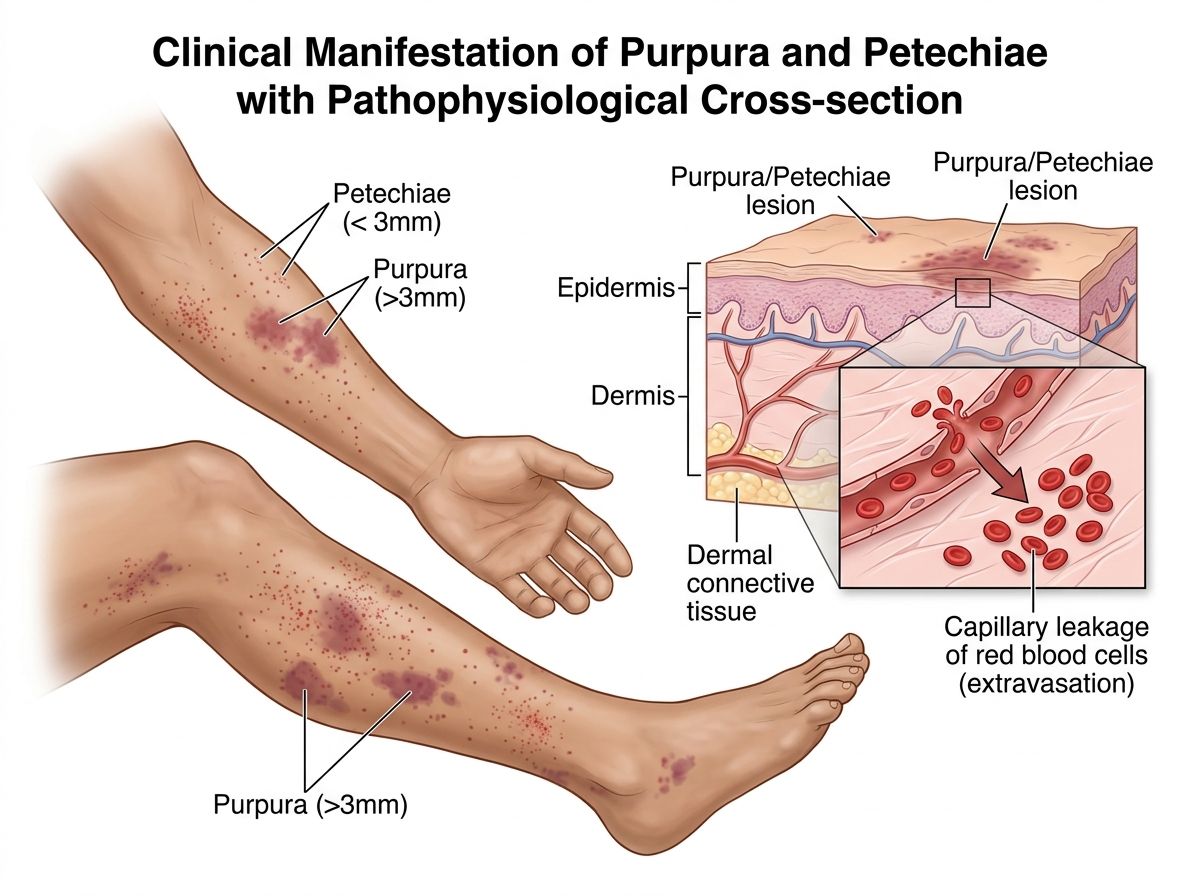
Purpura refers to visible red, purple, or brownish-red discolorations on the skin or mucous membranes caused by extravasation of erythrocytes into cutaneous tissues. It is broadly categorized into thrombocytopenic and non-thrombocytopenic purpuras.

What Is It?

Unlike erythema caused by capillary dilation, purpuric lesions do not blanch (fade) under direct pressure (positive diascopy test). They range in size from pinpoint petechiae (<2 mm) to purpura (2–10 mm) and large confluent ecchymoses (>10 mm).

Signs & Symptoms

Non-blanching purple macules, papules, or plaques on dependent extremities (especially legs and buttocks). Palpable purpura is a hallmark sign of leukocytoclastic vasculitis. Additional signs include epistaxis, gingival bleeding, arthralgias, abdominal pain, and hematuria.

Causes

Thrombocytopenia (Immune Thrombocytopenia / ITP, drug-induced, aplastic anemia), small-vessel vasculitis (IgA vasculitis / Henoch-Schönlein purpura, ANCA vasculitis), vascular fragility (senile purpura, scurvy), and infections (meningococcemia, infective endocarditis).

Diagnosis

Complete Blood Count (CBC) with peripheral blood smear, platelet count, coagulation studies (PT/INR, aPTT), comprehensive metabolic panel, urinalysis for proteinuria/hematuria, and punch skin biopsy with direct immunofluorescence (DIF).

Treatment & Management

Treatment addresses the underlying etiology: corticosteroids and IVIG for immune thrombocytopenia; systemic immunosuppressants for systemic vasculitis; discontinuation of offending medications; and urgent antibiotics for infectious purpura fulminans.

Important: Treatment decisions should always be made in consultation with a qualified healthcare professional. Do not start, stop, or change medications without medical guidance.

Prevention & Risk Reduction

Protect fragile aging skin from blunt trauma; manage chronic autoimmune conditions; and review antiplatelet/anticoagulant medications regularly with your physician.

Living With This Condition

Patients with chronic purpura should avoid contact sports during active thrombocytopenic episodes and report any spontaneous mucous membrane bleeding immediately.

When to Seek Medical Help

When to Contact a Healthcare Professional

Do not delay seeking medical care if needed

Contact a physician promptly upon discovering unexplained new purple spots or bruises that do not fade with direct fingertip pressure.

Emergency Warning Signs

Frequently Asked Questions

What is the "glass test" for purpura?

Pressing a clear drinking glass firmly against the rash. If the red or purple spots stay clearly visible and do not fade under pressure, it is purpura and requires immediate clinical evaluation.

What is the difference between petechiae and purpura?
Petechiae are tiny pinpoint spots (<2 mm), while purpura refers to larger spots (2–10 mm). Both represent blood leaking from small capillaries into the skin.

Medical Disclaimer

Medi Info Hub provides general health information for educational purposes only. The information on this website is not medical advice and is not a substitute for diagnosis, treatment, or consultation with a qualified healthcare professional. Do not delay seeking medical care because of information found on this website. In an emergency, contact your local emergency services immediately.

Published by: Medi Info Hub TeamLast updated: October 19, 2026