
For general information only. Not a substitute for professional medical advice.
Medi Info Hub Logo

Parkinson's Disease

Educational content • Medi Info HubUpdated: 10/19/2026
Parkinson's Disease clinical reference photography
Clinical Photographic Reference
Medical Visual GuideNeurology

Parkinson's Disease

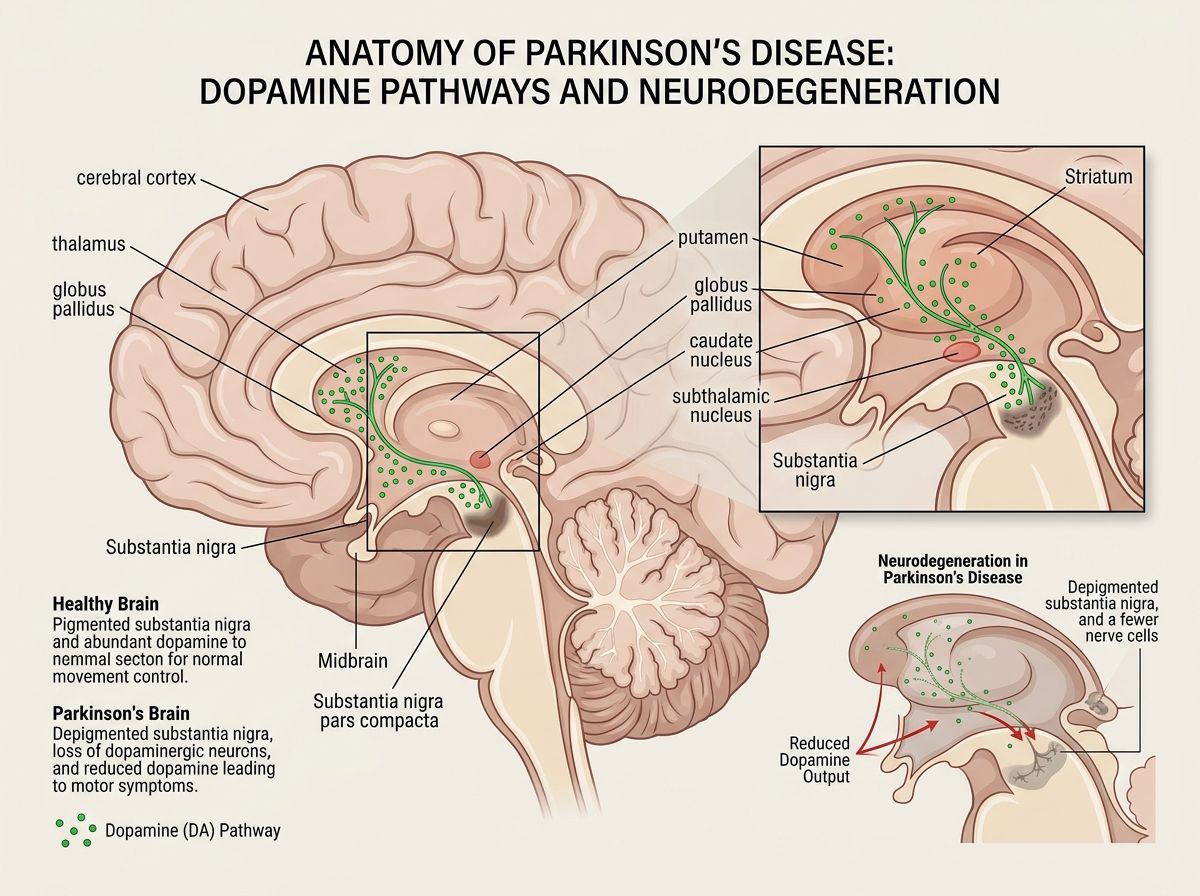
Educational photographic and clinical reference illustrating presentation, affected anatomy, or clinical evaluation of Parkinson's Disease.

Topic-Accurate VisualClinical Reference

Overview

Parkinson's disease is a chronic, progressive neurodegenerative movement disorder characterized by the loss of dopamine-producing neurons in the substantia nigra pars compacta, leading to cardinal motor signs: resting tremor, bradykinesia, rigidity, and postural instability.

What Is It?

Parkinson's disease is marked pathologically by intracellular alpha-synuclein aggregates known as Lewy bodies. As dopamine concentrations fall in the striatum, the basal ganglia circuitry fails to execute smooth, coordinated voluntary motor control.

Signs & Symptoms

Cardinal motor signs include resting "pill-rolling" tremor, bradykinesia (generalized slowness of movement), cogwheel rigidity, masked facial expression (hypomimia), festinating gait, and loss of postural reflexes. Non-motor symptoms include REM sleep behavior disorder, constipation, anosmia (loss of smell), cognitive slowing, and depression.

Causes

Complex interplay of age, environmental neurotoxin exposures (pesticides), and genetic susceptibility (mutations in LRRK2, PRKN, SNCA, and GBA). Dopaminergic neuronal apoptosis in the substantia nigra underlies motor symptoms.

Diagnosis

Diagnosis is primarily clinical, guided by UK Parkinson’s Disease Society Brain Bank Diagnostic Criteria or MDS Clinical Criteria demonstrating bradykinesia plus tremor or rigidity, along with positive response to dopaminergic therapy. DaTscan (dopamine transporter SPECT imaging) aids in atypical presentations.

Treatment & Management

Pharmacotherapy includes levodopa/carbidopa (dopamine precursor), dopamine agonists (pramipexole, ropinirole), MAO-B inhibitors (rasagiline), and COMT inhibitors. In advanced medically refractory disease, Deep Brain Stimulation (DBS) of the subthalamic nucleus or globus pallidus provides significant motor symptom relief.

Important: Treatment decisions should always be made in consultation with a qualified healthcare professional. Do not start, stop, or change medications without medical guidance.

Prevention & Risk Reduction

While there are no proven guaranteed preventive interventions, regular aerobic exercise, physical activity throughout midlife, and adherence to anti-inflammatory Mediterranean dietary patterns show neuroprotective correlations in clinical studies.

Living With This Condition

Multidisciplinary care incorporating physical therapy, occupational therapy, speech and swallow therapy (such as Lee Silverman Voice Treatment), and structured exercise regimens significantly improves quality of life and delays mobility loss.

When to Seek Medical Help

When to Contact a Healthcare Professional

Do not delay seeking medical care if needed

Consult a neurologist if you notice a subtle resting tremor in one hand, persistent stiffness or slow walking, handwriting becoming progressively smaller (micrographia), or frequent balance lapses.

Emergency Warning Signs

Frequently Asked Questions

How is Parkinson’s different from Essential Tremor?

Parkinson’s tremor occurs primarily at rest and is often asymmetric, while Essential Tremor occurs during action or maintaining posture (action/postural tremor).

Does Parkinson’s disease affect life expectancy?

With modern dopaminergic medications, physical therapy, and comprehensive care, individuals with Parkinson’s often maintain near-normal life expectancy.

Medical Disclaimer

Medi Info Hub provides general health information for educational purposes only. The information on this website is not medical advice and is not a substitute for diagnosis, treatment, or consultation with a qualified healthcare professional. Do not delay seeking medical care because of information found on this website. In an emergency, contact your local emergency services immediately.

Published by: Medi Info Hub TeamLast updated: October 19, 2026